The lack of a universal definition of access to energy has led to the emergence of several approaches attempting to measure access to energy using a variety of indicators. Wide-ranging approaches have been developed by various researchers and practitioners to measure different aspects of energy access that will help define strategies toward a more sustainable energy future.[1]
Certain approaches exist as frameworks but are suited better as supporting frameworks for particular scenarios. These frameworks are not as flexible as the ones that have already been discussed but are in fact tied to only one type of purpose or application.
Regulatory Indicators for Sustainable Energy
One model that utilizes indicators is the Regulatory Indicators for Sustainable Energy (RISE) model. It is a set of indicators comparing the policy and regulatory frameworks to support the achievement of sustainable energy goals on universal access to clean and modern energy. It is a tool for policy makers to compare national policy frameworks for sustainable energy as they seek to attract investment from the private sector.
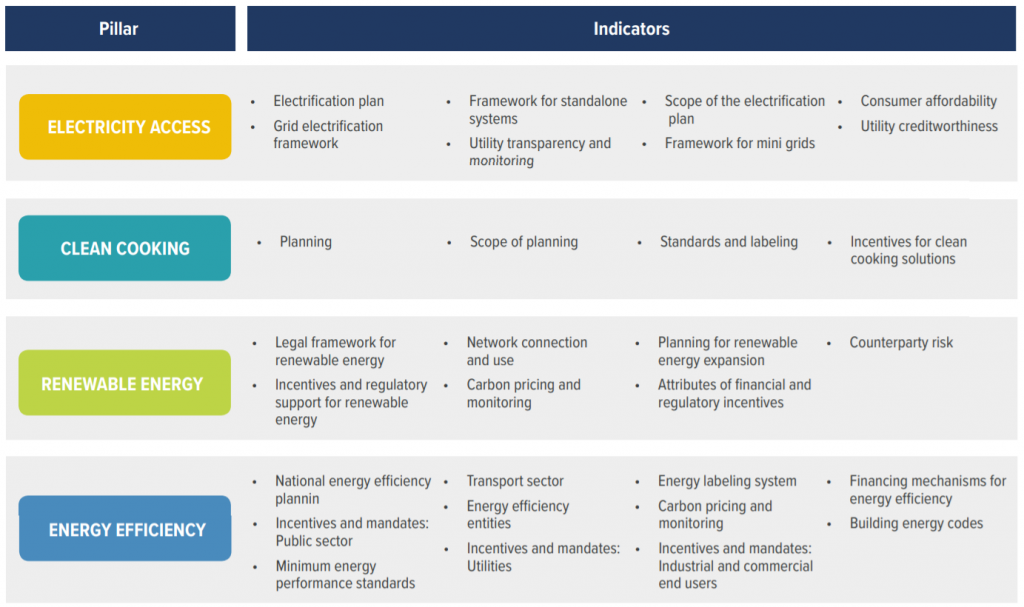
Source: WORLD BANK/ENERGY SECTOR MANAGEMENT ASSISTANCE PROGRAM; RISE 2020: SUSTAINING THE MOMENTUM
The Multi-Tier Framework
The Multi-Tier Framework (MTF) for measuring energy access was first introduced by the World Bank’s Energy Sector Management Assistance Program (ESMAP) in the 2013 Global Tracking Framework (GTF) report together with other organisations and programs.
MTF identifies three areas it is applicable to: one for assessing household access to energy, another for assessing the access to energy for productive engagement and lastly, a category for assessing the access to energy for community facilities. Each of these are further divided into energy applications specific to their categories. For household energy access, this is further divided into access to electricity, cooking solutions and space heating.
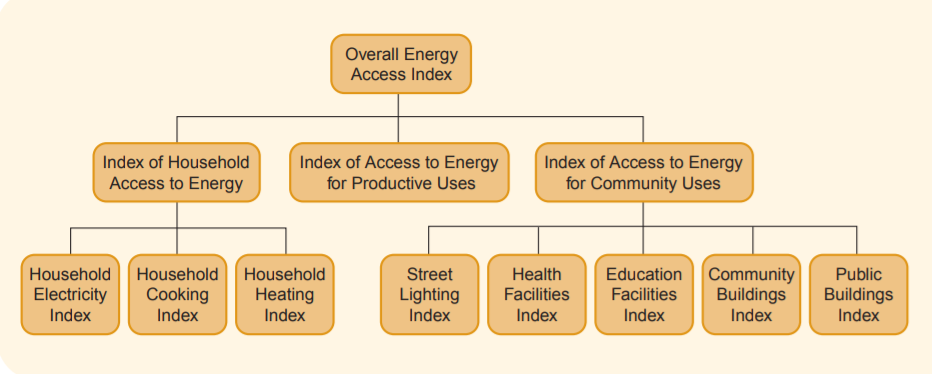
Source: ESMAP, BEYOND CONNECTIONS: ENERGY ACCESS REFINED
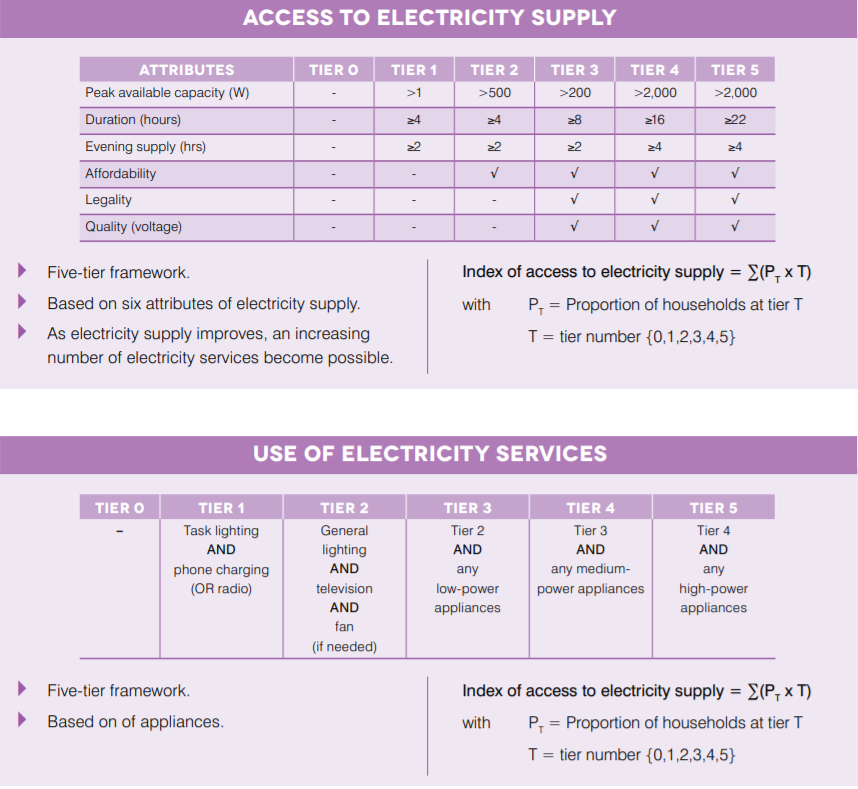
Source: ESMAP: Global Tracking Framework
[1] Energy Sector Management Assistance Program, Beyond Connections: Energy Access Redefined, 26-28.