In the Philippines, fossil fuel potential is found in 16 sedimentary basins covering an area of more than 700,000 square kilometers (km2) with a combined potential of 4,777 million barrels of fuel oil equivalent of oil and gas resources (Philippine Energy Plan). These basins are located in the Ilocos Shelf, Cagayan, Central Luzon, Bicol Shelf, Southeast Luzon, Mindoro-Cuyo, West Masbate-Iloilo, Visayan, Agusan-Davao, Cotabato, Sulu Sea, East Palawan, Southwest Palawan, Reed Bank, Northwest Palawan, and the West Luzon Trough as shown below.
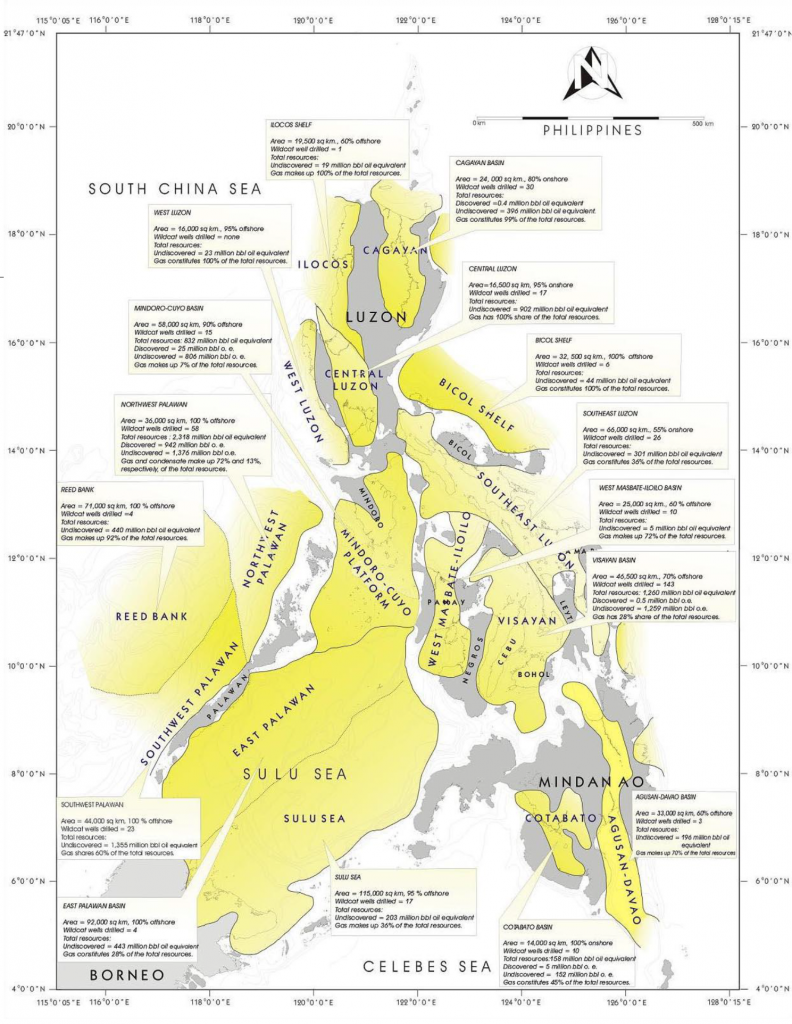
Source: DOE; “OIL AND GAS”; INVESTMENT OPPORTUNITIES IN THE PHILIPPINE ENERGY SECTOR
Oil
The world’s primary fuel source for transportation is oil. It is mainly formed by decomposing organic matter which settle in large quantities in sedimentary basins over time, but it also exists in shale and tar sands. Most oil is pumped out of underground reservoirs and then processed in refineries to create fuel oil, gasoline, liquefied petroleum gas, and other products like fertilizers, pesticides, pharmaceuticals, and plastics. Oil can cause serious environmental issues through oil spills and is a major source of greenhouse gas emissions.[1]
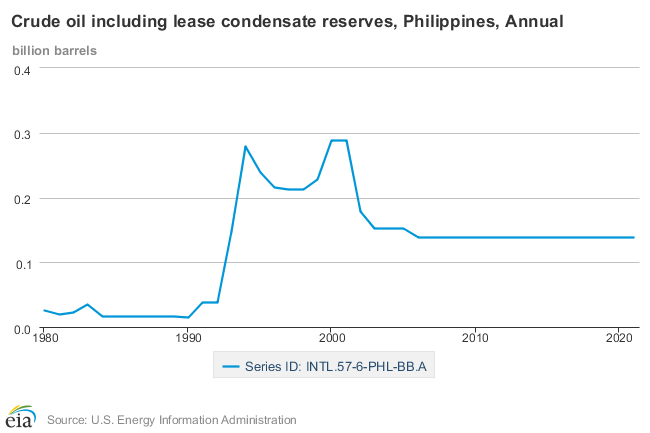
Source: U.S. ENERGY INFORMATION ADMINISTRATION, “PHILIPPINES: DATA FOR PETROLEUM AND OTHER LIQUIDS”, WWW.EIA.GOV/INTERNATIONAL/DATA/COUNTRY/PHL
Natural Gas
Natural gas is primarily composed of methane with other hydrocarbons, carbon dioxide, nitrogen and hydrogen sulfide. It is formed when layers of decomposing natural waste material is exposed to very high temperatures and pressures under the earth’s surface for millions of years. Resources are found isolated in natural gas fields in deep rock formations or associated with coal reservoirs as coal bed methane, and in close proximity to and with oil fields.
The Malampaya Deep Water Gas-to-Power project remains the largest source of natural gas in the country since the start of its commercial production in 2002. Its production fuels five natural-gas power plants contributing an average of 20 % of power generation for the Philippines. Malampaya will continue to supply 99% of the country’s natural gas contributing 584,000 million standard cubic feet out of the expected 588,331 million standard cubic feet between 2019 to 2022.[2]
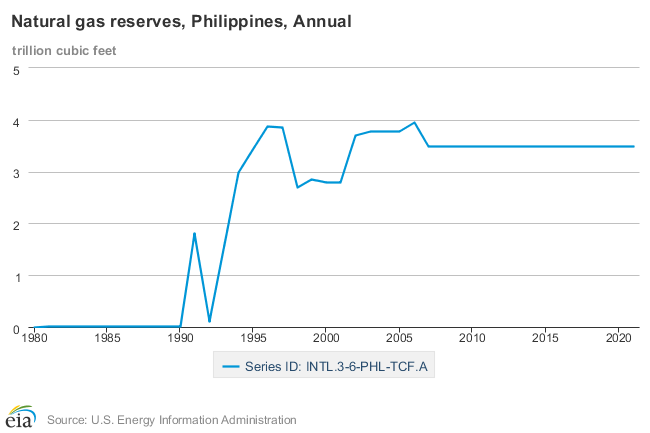
Source: U.S. ENERGY INFORMATION ADMINISTRATION, “PHILIPPINES: DATA FOR NATURAL GAS”, WWW.EIA.GOV/INTERNATIONAL/DATA/COUNTRY/PHL
Coal
Coal is the largest source of energy for the generation of electricity worldwide, accounting for approximately 38.4% of global electricity generation in 2017 due to abundance, low cost and ability to generate base load electricity.[3] Producing electricity as well as heat is achieved through the burning of coal, which at the same time releases a harmful amount of carbon dioxide into the atmosphere. The process of mining coal is also damaging not only to the environment with the chemical waste it releases into the rivers and streams, but also to human health.
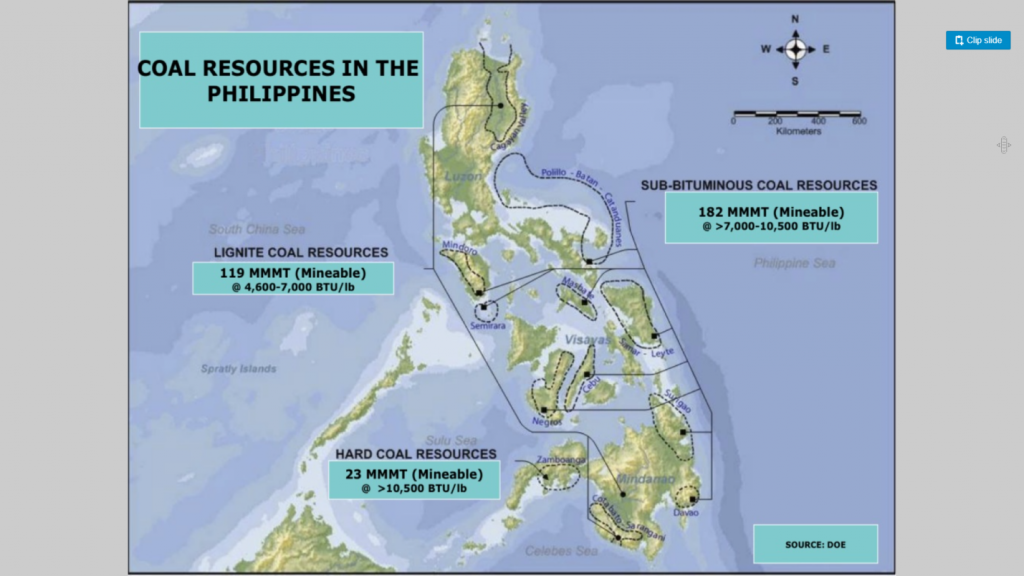
Source: ASIAN INSTITUTE OF TECHNOLOGY; “ENERGY RESOURCES INDUSTRY PHILIPPINE UPDATE”; OVERVIEW OF GLOBAL AND PHILIPPINE ENERGY OUTLOOK
[1] Ibrahim Dincer et al., Comprehensive Energy Systems, 526.
[2] DOE, Philippine Energy Plan 2018-2040, 62, 64.
[3] DOE, Philippine Energy Plan 2018-2040, 66.