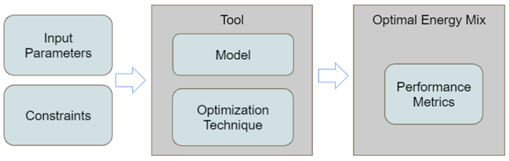
The methodologies and tools generally follow the flow and structure shown below. The tool outputs the optimal combination and sizes of energy technologies to be installed given a set of input parameters and constraints. To accomplish this, the tool creates a model or a mathematical representation of the energy access problem that is then solved through an optimization technique.
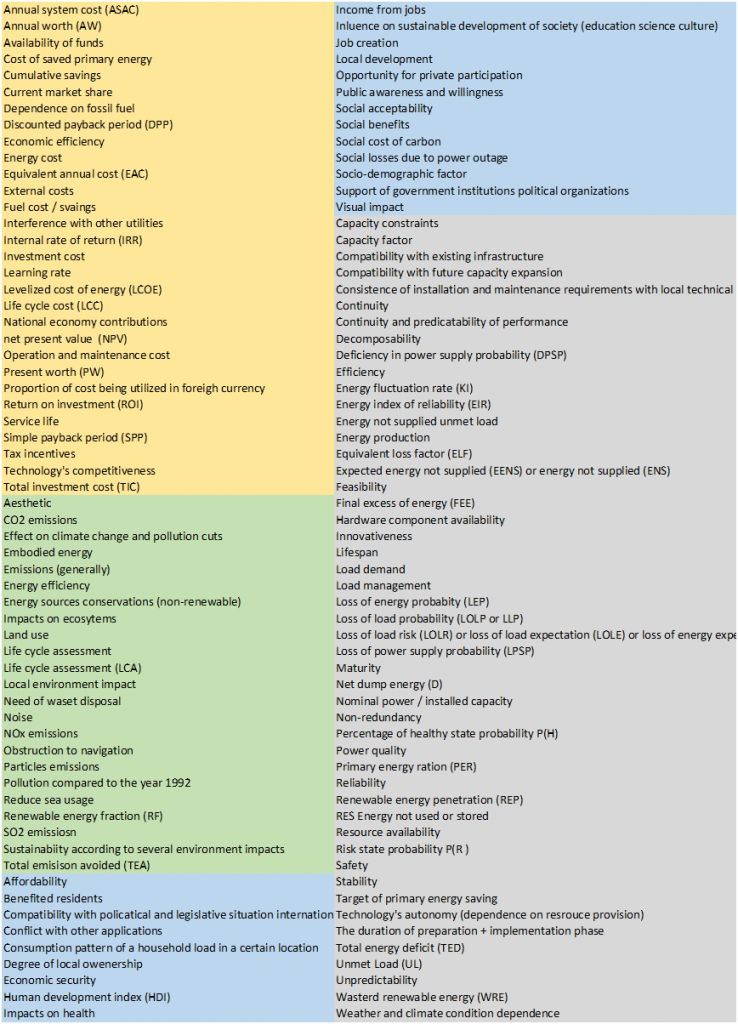
The figure below shows the different performance metrics in literature that are categorized into different aspects of sustainability. Most of these performance indicators fall into the technical and economic aspects. Economic indicators pertain to cost or revenue of the energy system. Technical aspects are typically about how reliable the energy system is in satisfying the electricity demand. However, to ensure sustainability, environmental and social performance metrics of planned energy systems are also being considered. Environmental indicators are the impact of the energy system to the climate and ecology. Social aspects are related to affordability, local community development and the acceptance of the stakeholders which are all important for energy access projects.

Cuesta, M. A., T. Castillo-Calzadilla, and C. E. Borges. "A critical analysis on hybrid renewable energy modeling tools: An emerging opportunity to include social indicators to optimise systems in small communities." Renewable and Sustainable Energy Reviews 122 (2020): 109691..
Babatunde, Olubayo Moses, Josiah Lange Munda, and Yskandar Hamam. "A comprehensive state-of-the-art survey on hybrid renewable energy system operations and planning." IEEE Access 8 (2020): 75313-75346.